Yoga Exercise has become a popular choice for people seeking a natural, simple, and sustainable approach to health. Today’s fast-paced lifestyle brings stress, stiffness, poor sleep, and low energy. Yoga Exercise helps restore balance in the body and mind without the need for heavy equipment or intense workouts. It improves posture, breathing, flexibility, and emotional stability, making it suitable for beginners, office workers, students, and older adults alike. With consistent practice, it also supports digestion, metabolism, joint mobility, and mental clarity.
How Does Yoga Routine Improve Mental and Emotional Balance?
Yoga Exercise supports mental and emotional well-being by working with the nervous system, breath, and awareness. It helps reduce stress, clear the mind, and improve daily mental stability. It also helps to:
- Calm the stress response
- Reduce emotional tension
- Improve focus and clarity
- Lower anxiety levels
- Enhance emotional balance
- Improve memory
- Promote better sleep
With consistent practice, It helps the mind feel calmer, more present, and more resilient during daily life, making emotional balance easier to maintain.
What Lifestyle Issues Can Yoga Routine Help Improve?
Many modern health complaints come from sedentary routines, long hours sitting, and high stress. Yoga Exercise helps improve common lifestyle-related issues such as back pain, neck and shoulder tightness, joint stiffness, fatigue, low energy, sleep disruptions, stress, irritability, poor digestion, and reduced lung capacity.
By combining mindful movement, controlled breathing, and body awareness, Yoga Exercise naturally supports these conditions without strain or heavy impact. It allows the body to release built-up tension, improves circulation, and encourages healthier functioning across multiple systems, making it an effective choice for today’s common lifestyle concerns.
How Does Yoga Practice Benefit the Body?
Yoga Exercise supports physical health in many ways. It activates deep muscles, engages the joints, and builds functional strength while improving breathing and circulation.
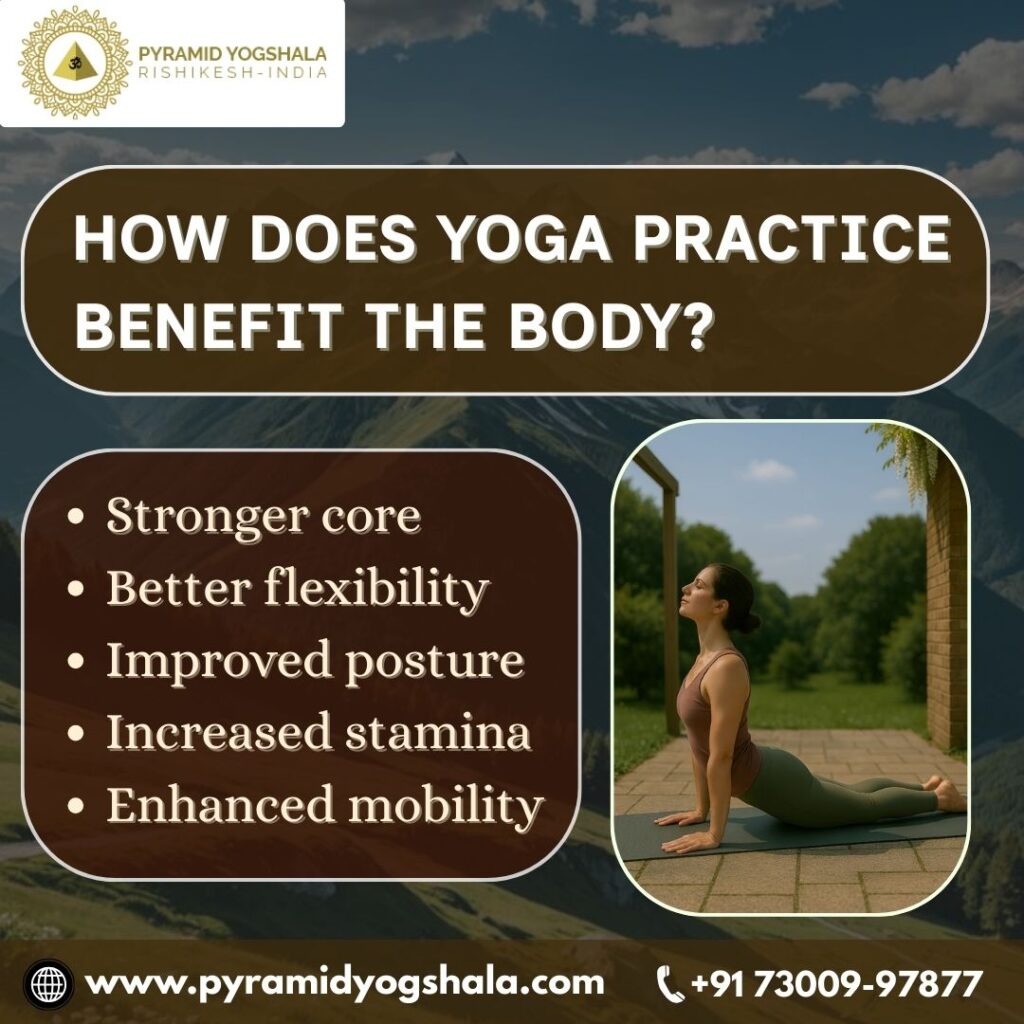
- Better flexibility: Improves muscle elasticity and reduces stiffness, helping the body move more freely during daily tasks, workouts, or simple stretching.
- Improved posture: Strengthens the spine and core, reducing slouching, correcting alignment issues, and supporting healthier sitting and standing positions throughout the day.
- Stronger core: Engages the deep abdominal and stabilizing muscles that protect the spine, enhance balance, and support controlled movement in both yoga and everyday activities.
- Enhanced mobility: Increases joint range of motion and helps the body transition smoothly between movements, reducing stiffness that often comes from long sitting or inactivity.
- Increased stamina: Boosts physical endurance through breath control and sustained muscle engagement, allowing the body to maintain energy and strength during prolonged activities.
Unlike gym workouts, Yoga Exercise uses slow and controlled movements that protect the joints and teach the body healthier patterns of motion.
Who Can Practice Yoga and How Can Beginners Start?
Yoga Exercise welcomes all ages and fitness levels, and beginners can start without fear or pressure. The key is to go slow, begin with basic postures, and focus more on breathing rather than chasing perfection. Many people begin with simple poses, such as Child’s Pose, Cat-Cow, Mountain Pose, and Bridge Pose, as these movements gently warm up the spine and activate thecore muscles for a smooth yoga journey. Similarly, face yoga follows a beginner-friendly approach, allowing individuals to gently and naturally activate their facial muscleswithout strain or equipment.
For structured guidance, many beginners join reputable schools such as Pyramid Yogshala to build consistency and proper alignment from the start.
FAQ’s ( Frequently Asked Question )
1. Is yoga practice good for stress?
Yes, it lowers stress hormones and calms the nervous system.
2. Can beginners do a yoga routine?
Definitely. It offers variations for all body types and abilities.
4. Does Yoga Exercise Help in Flexibility?
Yes, it increases flexibility by lengthening muscles safely over time.
5. Can yoga routine improve sleep?
Yes, it relaxes the body and mind, improving sleep quality naturally.
6. Do I need equipment for my yoga routine?
No. A mat and breathable clothing are enough for most practices.
Final Thoughts
Yoga practice supports long-term health by strengthening the body, balancing emotions, and improving mental clarity without strain. It helps reduce stress, correct posture, and ease digital fatigue. With consistency, yoga becomes a lifestyle that promotes better sleep, digestion, and confidence. For anyone seeking natural daily wellness, yoga offers a holistic path. It feels simple, accessible, and motivating for beginners everywhere. Many students at Pyramid Yogshala experience these holistic benefits as part of their daily journey. Ready to begin your journey? Join now.
🌐 Website: https://pyramidyogshala.com
📞 Phone: +91 73009-97877
📧 Email: pyramidyogshalausa@gmail.com