Kapalbhati is one of the most popular pranayama practices in yoga. It is simple, fast, and deeply energizing. Many practitioners credit this yogic practice improving digestion, boosting metabolism, and helping them feel mentally sharp and emotionally lighter. In a world filled with stress, fatigue, and distractions, It offers a refreshing way to clear mental fog and activate the body’s inner fire. At Pyramid Yogshala, Kapalbhati is taught with traditional yogic alignment, breathing techniques, and proper guidance to make the practice safe and effective for beginners. This blog explores what this yogic practice really does for your body and mind in a clear and practical way.
What Is Kapalbhati and Why Is It Practiced?
This practice is a yogic pranayama technique that involves passive inhalation and forceful exhalation. Unlike normal breathing, It emphasizes short and sharp exhales that stimulate abdominal muscles.
The word “Kapalbhati” comes from Sanskrit:
- Kapal = skull
- Bhati = shining or illuminating
Together, It means “skull-shining breath,” symbolizing clarity, brightness, and awakening.
People practice this yogic practice for various reasons — from better digestion to mental clarity and emotional balance.
How Does This Breathing Technique Affect the Brain and Nerves?
Beyond the physical benefits, this pranayama has a strong influence on mental and emotional health. The rhythmic breath releases stress and slows down mental fluctuations. Practitioners often experience more clarity, sharper concentration, and improved memory.
Kapalbhati activates the brain’s prefrontal cortex — the region responsible for awareness, planning, and decision-making. It also balances the nervous system and reduces mental fatigue caused by overthinking or anxiety. At Pyramid Yogshala, this yogic method is taught as a tool for emotional cleansing and mental reset, especially useful for people facing stress or burnout.
Who Should Practice Kapalbhati and How Often?
This pranayama is suitable for most adults with normal health conditions. It is often practiced every morning on an empty stomach for 5 to 10 minutes. Beginners can start with 30 strokes and gradually increase to 100–200 strokes as the body adapts. Practicing daily helps maintain rhythm, stability, and deeper awareness of the breath.
However, this yogic practice should be avoided by people with:
- High blood pressure
- Heart conditions
- Hernia
- Pregnancy
- Severe spinal or abdominal issues
Practicing under trained teachers ensures safe progression and better results.
What Are the Benefits of Kapalbhati?
This pranayama stimulates the abdominal region, diaphragm, and respiratory muscles. The rapid exhalation increases oxygen intake and supports healthier digestion and metabolism.
Key physical benefits include:
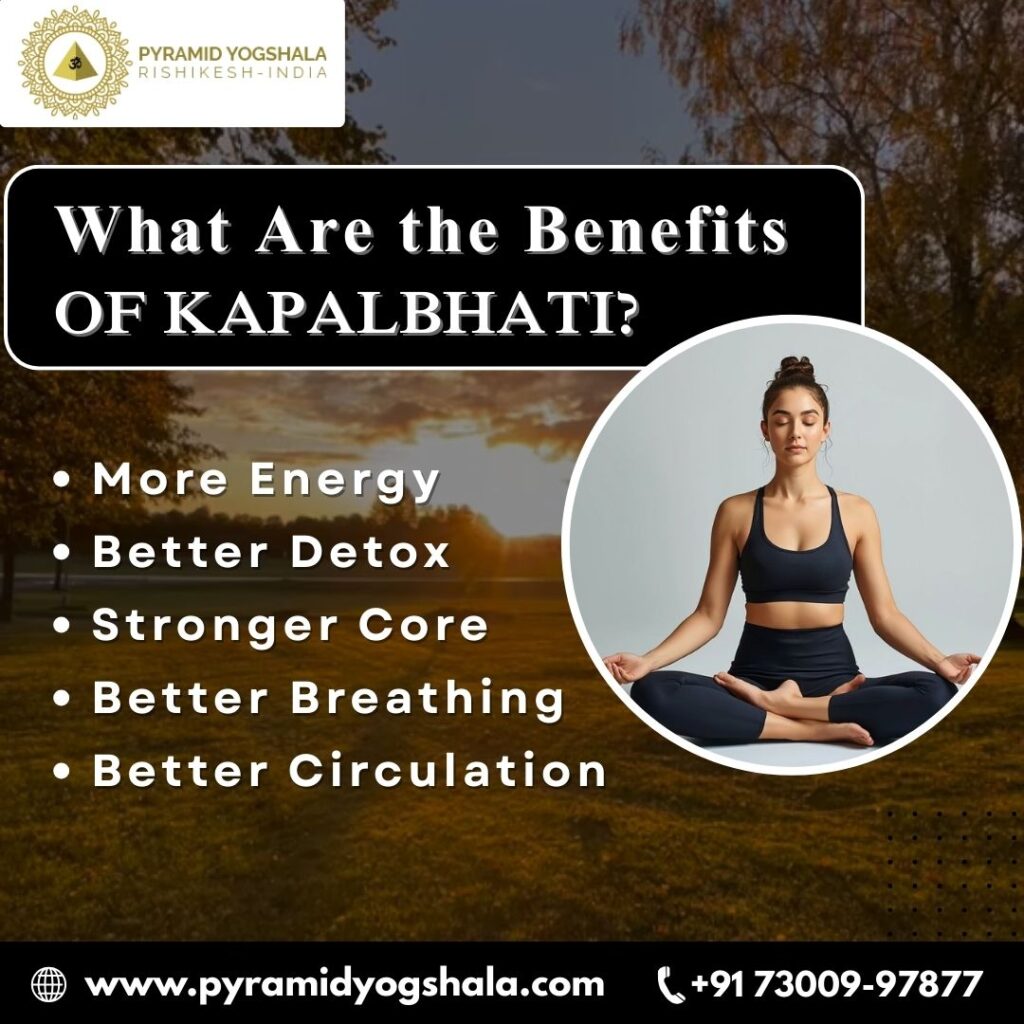
- Better Breathing: improves lung capacity and breath control, making breathing feel easier and more efficient.
- Better Circulation: boosts oxygen flow throughout the body, helping your cells function more efficiently.
- Stronger Core: engages and strengthens core muscles, supporting better posture and stability.
- Better Detox: aids natural detox through active exhalation, helping the body release stagnant air and waste.
- More Energy: reduces lethargy and sluggishness, helping the body feel lighter and more active.
Regular practice generates internal heat that supports digestion and metabolic fire, making this pranayama especially useful for sedentary lifestyles and weak digestion. At Pyramid Yogshala, students are guided to practice this technique correctly so that the full physical benefits can unfold safely and progressively.
How Does This Breathwork Act as a Detox for the Body?
This pranayama is categorized as a kriya — a yogic cleansing method — because it purifies both the respiratory tract and mental space. The rapid exhalation removes stale air, toxins, and carbon dioxide from the lungs. Many practitioners feel lighter and clearer afterward, as if internal clutter has been swept out.
On a subtle level, yogis believe Kapalbhati clears energetic blockages and activates the solar plexus chakra, increasing motivation, confidence, and inner strength. This makes the practice not just a breathing exercise, but a transformative internal cleansing tool
Frequently Asked Questions About Kapalbhati
1. Can beginners practice this pranayama?
Yes, beginners can start gently with proper guidance.
2. How long should I practice this breathing technique daily?
Take your time to build up your duration gradually.
3. Does this cleansing breath support weight loss?
Yes, by enhancing metabolism and improving digestion.
4. Is this yogic method safe during pregnancy?
No, the practice should be avoided during pregnancy.
5. When is the best time to practice this breathwork?
Morning on an empty stomach is considered ideal.
Conclusion
Kapalbhati is more than a breathing exercise. It is a powerful yogic method that energizes the body, sharpens the mind, and clears emotional heaviness. Regular practice supports better digestion, better focus, and a lighter state of being. When taught correctly at places like Pyramid Yogshala, this breathwork practice becomes a safe and transformative part of daily wellness. Whether you are seeking clarity, energy, or inner balance, Kapalbhati can become a reliable in your practice. With consistency, it bridges traditional yogic wisdom with modern lifestyle needs, helping you feel healthier, stronger, and more centered from within.